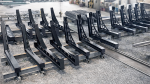

Steel Beams – Key Structural Component in Steel Buildings
In modern construction, steel beams are among the most critical structural components, playing a key role in supporting and transferring loads throughout a building.
Thanks to their strength, durability, ease of installation, and high load-bearing capacity, steel beams are widely used in pre-engineered buildings, industrial factories, high-rise structures, and many other steel-framed constructions.
This article provides a detailed look at what a steel beam is, including its structure, functions, and common types, helping you choose the most suitable solution for your company’s construction needs.
1. What Is a Steel Beam?
A steel beam is a primary structural element designed to support and transfer loads from floors, roofs, or other structural parts down to the columns and foundations.
In simpler terms, a steel beam serves as the “spine” of a structure, ensuring the stability, rigidity, and safety of buildings, factories, and other steel-frame projects.
Steel beams are typically made from hot-rolled steel, built-up steel sections, or standard profiles such as I, H, C, or U beams, depending on the design requirements and project scale.
2. Structure of a Steel Beam
A complete steel beam generally consists of three main parts:
Web: The central vertical section that resists shear forces and bending stresses.
Flanges: The top and bottom plates that handle compression and tension when the beam bends.
Connections and plates: Used to link beam sections or connect beams to columns, ensuring structural integrity and rigidity.
Depending on the design, steel beams can be joined using high-strength bolts, welding, or a bolt–weld combination.
3. Key Advantages of Steel Beams
3.1 High Strength and Load-Bearing Capacity
Steel has exceptional tensile, compressive, and bending strength.
Steel beams can carry heavy loads without deformation, making them ideal for large-span structures such as factories, warehouses, stadiums, and commercial centers.
3.2 Fast and Accurate Construction
Since steel beams are prefabricated in factories, onsite assembly is quick and precise — significantly reducing construction time and minimizing errors.
3.3 Flexible Design
Steel beams can be customized in size, height, and cross-section to suit different project types.
They can also be combined with materials like concrete, glass, wood, or insulated panels to enhance aesthetics.
3.4 Recyclable and Sustainable
Steel is 100% recyclable without losing quality, helping reduce construction waste and support sustainable development goals.
4. Common Types of Steel Beams
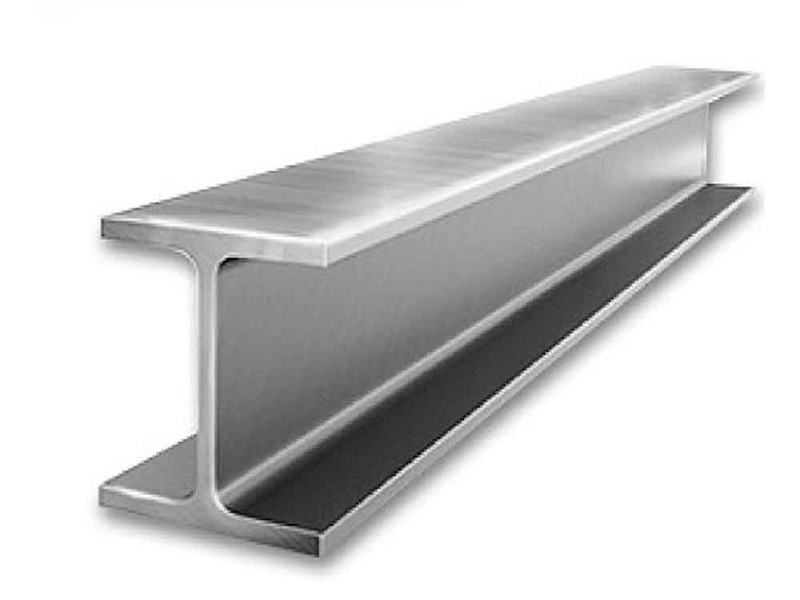
4.1 I-Beam (I-Shaped Beam)
Characterized by an “I” cross-section, this beam type is widely used in both civil and industrial projects.
It offers good vertical bending resistance and is lighter than H-beams.
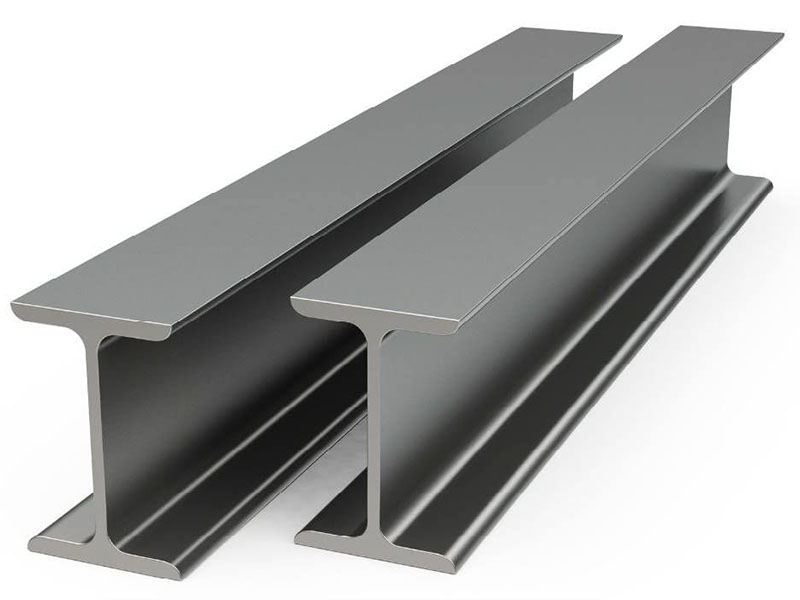
4.2 H-Beam
With wider and thicker flanges, H-beams provide superior load-bearing capacity and stability, making them suitable for industrial factories, large steel structures, bridges, and heavy-duty buildings.
4.3 Built-Up Beam
Fabricated by welding individual steel plates into I or H shapes, allowing full customization of dimensions and load capacity.
Commonly used in large-span or technically demanding projects.
4.4 Box Beam
A closed-section beam with a square or rectangular cross-section, known for excellent torsional stiffness.
Ideal for structures requiring high aesthetics or uneven load distribution.
5. Applications of Steel Beams in Construction
Steel beams are widely used across various modern construction types, including:
Industrial factories, warehouses, and production plants
High-rise buildings, commercial centers, and showrooms
Steel bridges, stadiums, and exhibition halls
Residential projects such as homestays, steel-frame villas, and small pre-engineered houses
Their strength, flexibility, and efficiency make steel beams an essential element in achieving both technical excellence and architectural value.

6. Important Considerations When Selecting and Installing Steel Beams
Choose the appropriate steel grade and beam dimensions based on load, span, and intended use.
Ensure precise fabrication according to design drawings; welding and bolting must meet quality standards.
Apply anti-corrosion coatings or hot-dip galvanizing to enhance durability, especially for coastal or humid environments.
Follow strict safety and installation standards, such as AS/NZS 5131 or AWS D1.1, during construction.


Conclusion
Steel beams are indispensable components in pre-engineered steel buildings and modern construction.
With outstanding advantages in strength, load capacity, flexibility, and fast installation, they are increasingly favored across both industrial and civil projects.
Selecting a reliable design–fabrication–installation contractor is crucial to ensure beam quality, extend the lifespan of the structure, and optimize investment efficiency for your business.
 Learn more: Latest Cost Estimates for Pre-Engineered Buildings

📞 Hotline: (+84) 918 23 23 65
📧 Email: mkt@qsbsteel.com
🌐 Website: https://qsbsteel.com/
👉 Contact QSB Steel today for expert consultation and the most suitable solutions for your project! 🚀
- Vietnamese Steel Structure Companies – Sustainable and Efficient Construction Solutions
- The latest standardized factory design and construction process
- Dat Vinh Tien Factory
- QSB STEEL- TEAM BUILDING 2025
- Prefabricated Modular Steel Buildings: A Modern Solution for Flexible and Cost-Effective Spaces
- Factory Steel Frame: Which Type Best Fits Your Needs?
- ASSEMS Korea factory
- QSB Steel Football Team Shines at the Southern Structural Steel Association Tournament 2024!
- Natucon Singapore factory
- 7 Effective Solutions to Reduce Pre-Engineered Steel Factory Construction Costs Without Compromising Quality
Related news:

Heavy Steel Structures: Common Applications in Modern Industrial Projects
-
What Is Steel Surface Shot Blasting? Is It Mandatory?
Essential Steel Structure Components for Industrial Buildings
Heavy Steel Components at QSB STEEL: Large-Scale Steel Fabrication Capability
ISO 45001 Occupational Health and Safety Management System in Heavy Steel Structure Construction Projects
Updated Prefabricated Steel Building Construction Price Quote 2026
-
Steel Plate Manufacturing: Common Defects and Applications

Food Processing Steel Factory Design: Ensuring Hygiene Standards and Production Efficiency