
Manufacturing Complex Built-Up Steel Components: Technology and Construction Challenges
In modern industrial construction, particularly for large-scale factory buildings, warehouses, and commercial centers exceeding 3,000 m², the use of complex built-up steel components has become a key structural solution.
This approach not only optimizes usable space by eliminating intermediate columns, but also delivers superior economic and technical efficiency compared to traditional construction methods.
This article provides an in-depth look at the definition, manufacturing technology, and real-world construction challenges of these specialized steel components.
1. What Are Complex Built-Up Steel Components?
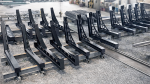
Built-up steel components are structural members fabricated by welding or bolting individual steel plates together in a factory according to specific engineering designs.
Unlike standard hot-rolled steel sections, built-up components are custom-manufactured for each individual project.
1.1 Definition and Classification of Built-Up Steel Components
Common types of built-up steel components include:
Built-up girders: Used for long spans, with precisely calculated flange and web thicknesses to meet load requirements.
Built-up columns: Typically box-shaped or large H-sections, designed to withstand high axial compression and bending forces.
Space trusses and roof truss systems: Complex structures for ultra-long-span roofs, optimized for reduced self-weight.


1.2 Differences Between Hot-Rolled Steel Sections and Built-Up Steel Components
| Criteria | Hot-Rolled Steel Sections | Built-Up Steel Components |
|---|---|---|
| Cross-section | Fixed, manufacturer-standardized | Flexible, project-specific |
| Dimensions | Limited height and length | Can be fabricated as extra-long and heavy-duty |
| Applications | Small to medium projects | Large-scale industrial projects |
2. The Importance of Built-Up Steel Components in Large Projects
For industrial project owners, choosing built-up steel components offers clear competitive advantages.
2.1 Optimized Load-Bearing Capacity and Long-Span Capability
The greatest advantage of built-up steel is the ability to create long-span beams and trusses without intermediate supports.
This results in open, unobstructed production or storage spaces, improving operational efficiency by allowing easier machinery layout and forklift movement.
2.2 Material Savings and Reduced Structural Self-Weight
Because cross-sections are precisely calculated according to actual load conditions at each location, built-up components reduce steel consumption.
This leads to savings in material costs as well as reduced foundation construction costs.
2.3 Flexibility in Architectural Design and Functional Requirements
Engineers can freely customize the shape and dimensions of components to meet complex architectural designs or special load requirements, such as heavy crane loads or extreme wind conditions.
3. Advanced Manufacturing Technology for Built-Up Steel Components
The production of complex built-up steel components requires advanced technology and strict quality control procedures at steel fabrication plants.
3.1 Basic Manufacturing Process
The standard process includes:
Steel plate cutting according to drawings → component assembly → automatic submerged arc welding → beam straightening → surface cleaning → anti-corrosion painting or hot-dip galvanizing.
3.2 Application of CNC Technology and Automated Welding Robots
Modern factories utilize highly automated machinery to ensure absolute precision.
Welding robots and automatic welding systems provide consistent weld quality, minimize human error, and play a critical role in ensuring the durability of built-up components.
3.3 Quality Control (QC) of Materials and Welding Processes
Weld quality is rigorously inspected using non-destructive testing methods such as ultrasonic testing or radiographic inspection to detect defects and ensure maximum structural safety.
4. Challenges in On-Site Installation of Complex Steel Components
In addition to precise fabrication, on-site erection of complex steel components presents significant logistical and technical challenges.
4.1 Transportation of Extra-Long and Heavy Components
Built-up components are often extremely large in size (20–30 meters in length), requiring specialized transportation such as hydraulic trailers or barges, along with special transport permits.
4.2 Precision in Installation and Alignment
Installation tolerances must be extremely tight.
The use of electronic total stations and highly experienced engineering teams is essential to ensure accurate alignment between components and foundation anchor bolts.
4.3 Ensuring Occupational Safety During Heavy Lifting Operations
Lifting components weighing tens of tons requires strict safety measures, high-capacity cranes, and 24/7 safety supervision on site.
5. Criteria for Selecting a Reliable Steel Structure Contractor
To ensure the success of large-scale projects, selecting the right contractor is a decisive factor.
5.1 Manufacturing Capacity and Factory Equipment
Priority should be given to contractors with modern fabrication facilities, ISO 9001 quality management certification, and highly automated machinery systems.
5.2 Experience in Similar Projects
Review the contractor’s completed pre-engineered steel building projects, especially those exceeding 3,000 m² and utilizing complex built-up steel components.
5.3 Warranty Policy and Quality Commitment
Choose contractors that provide clear commitments regarding material quality, weld integrity, and long-term warranty policies for steel structures.
CONCLUSION
Complex built-up steel components are an optimal solution for space efficiency and cost-effectiveness in large-scale industrial projects.
Although their fabrication and installation involve significant technical challenges, these challenges can be effectively managed through modern technology and experienced engineering teams.
If you are seeking consultation, design support, or cost estimation for steel component fabrication and installation for your factory project, please contact us to receive the most optimal solution.
Hotline for Export Steel Structure Quotation: Click here
 Learn more: Latest Cost Estimates for Pre-Engineered Buildings

📞 Hotline: (+84) 918 23 23 65
📧 Email: mkt@qsbsteel.com
🌐 Website: https://qsbsteel.com/
👉 Contact QSB Steel today for expert consultation and the most suitable solutions for your project! 🚀
- Dat Vinh Tien Factory
- Fire safety for steel factories: Required documentation for large-scale factory approval
- How to Reduce Steel Building Construction Costs: How to Optimize Budget When Building an Industrial Warehouse?
- The Key Role of Steel Structures in Construction and Economic Growth
- Golf course and roof of PV Gas Tower
- Pre-engineered steel building models suitable for business sectors
- Pre-Engineered Steel Food Factory – GMP-Compliant Solution
- Important Considerations in Pre-engineered Steel Building Design
- Are pre-engineered steel buildings durable? Detailed explanation & outstanding advantages.
- Frequently Asked Questions about Pre-Engineered Steel Buildings
Related news:

Heavy Steel Structures: Common Applications in Modern Industrial Projects
-
What Is Steel Surface Shot Blasting? Is It Mandatory?
Essential Steel Structure Components for Industrial Buildings
Heavy Steel Components at QSB STEEL: Large-Scale Steel Fabrication Capability
ISO 45001 Occupational Health and Safety Management System in Heavy Steel Structure Construction Projects
Updated Prefabricated Steel Building Construction Price Quote 2026
-
Steel Plate Manufacturing: Common Defects and Applications

Food Processing Steel Factory Design: Ensuring Hygiene Standards and Production Efficiency