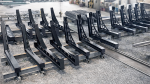

Pre-Engineered Steel Food Factory – GMP-Compliant Solution
The food industry is a highly specialized sector that requires a clean, safe, and tightly controlled production environment, while also demanding fast construction progress to bring production lines into operation as early as possible.
For this reason, pre-engineered steel factories are increasingly being chosen by food manufacturers thanks to their fast construction, high hygiene standards, easy expandability, long-term durability, and full compliance with GMP, HACCP, ISO 22000, or specific industry regulations.
Below is a comprehensive and in-depth analysis to help businesses understand why this model has become a leading solution today.
1. What Is a Pre-Engineered Steel Factory for Food Production?
A pre-engineered steel food factory is an industrial facility that uses pre-engineered steel structures as its primary framework, combined with specialized clean materials such as insulated panels, antibacterial panels, epoxy flooring, and integrated ventilation–cooling–air filtration systems.
All structural components are fabricated in factories and then transported to the site for bolted assembly, ensuring:
High precision
Fast installation
Minimal construction errors
Maximum reduction of dust and contamination during construction
These factors are critically important for food factories, especially for businesses that must maintain strict hygiene standards throughout the building’s lifecycle.
2. Key Criteria When Constructing a Food Processing Factory
Food manufacturers typically have strict and specific requirements, including:
2.1 Compliance with Safety, Hygiene, and Cross-Contamination Prevention Standards
Required standards may include:
GMP (Good Manufacturing Practices)
HACCP (Hazard Analysis and Critical Control Points)
ISO 22000 / FSSC 22000
Industry-specific regulations for dairy, meat, seafood, beverages, etc.


To meet these standards, pre-engineered steel factories commonly use:
PU/PIR insulated panels with fire resistance and antibacterial surfaces, smooth and easy to clean
Epoxy or polyaspartic flooring with waterproof and anti-slip properties
Airlock doors and cleanroom zoning systems
Materials designed to minimize dust accumulation and eliminate gaps
2.2 Control of Temperature, Humidity, and Air Pressure
Food production requires:
Cold rooms and freezing rooms
Closed-loop production zones
Ventilation, air-conditioning, and dehumidification systems
Raw material storage areas
Pre-engineered steel structures offer excellent load-bearing capacity and allow seamless integration of these systems without cracking or settlement issues common in traditional concrete buildings.
2.3 Functional Layout Based on Production Technology Flow
A typical food factory includes:
Raw material preparation and processing areas
Cooking, mixing, or packaging zones
Storage areas
Finished goods warehouses and cold storage
Technical areas, QC rooms, and laboratories
Pre-engineered steel buildings allow flexible layouts, optimizing material and product flow, ensuring one-way processing principles and preventing cross-contamination.
3. Advantages of Pre-Engineered Steel Factories in Food Production
3.1 Fast Construction and Reduced Time to Operation
Food industry projects often require tight schedules to meet trial runs and supply contracts. Pre-engineered steel construction can reduce timelines by 30–50% compared to traditional concrete structures.
3.2 Optimized Space and Flexible Production Line Layouts
With large clear spans of 20–50 meters and minimal internal columns, steel factories provide ideal conditions for installing machinery, cold storage systems, pipelines, mixing tanks, and processing equipment.
3.3 Clean, Hygienic, and Food-Safety-Compliant Environments
Pre-engineered steel factories easily integrate clean materials, resist mold and dust generation, and ensure hygienic surface finishes compliant with food industry standards.
3.4 Easy and Cost-Effective Expansion
As businesses expand production capacity or add new lines, steel structures allow quick and economical extensions without disrupting ongoing operations.
3.5 Long-Term Operating Cost Savings
Thanks to insulated materials, soundproofing, and intelligent ventilation systems, these factories operate efficiently and significantly reduce energy consumption.
3.6 High Durability and Long Service Life (40–50 Years)
Modern steel structures offer excellent load-bearing performance and corrosion resistance—especially when hot-dip galvanized steel is used in areas exposed to moisture or food-processing chemicals.
4. Construction Costs of Pre-Engineered Steel Food Factories
Costs depend on several factors, including:
Factory area and height
Hygiene requirements (cleanrooms, insulated panels, epoxy flooring)
Cooling, ventilation, and odor treatment systems
Level of production automation
Equipment load requirements
Cold storage and technical areas
However, compared to traditional reinforced concrete construction, pre-engineered steel factories remain more cost-effective and predictable, with fewer cost overruns thanks to prefabrication and rapid installation.
5. Why Should Food Manufacturers Choose QSB Steel?
QSB Steel specializes in large-scale industrial pre-engineered steel construction, including food processing plants, beverage factories, cold storage facilities, and preservation warehouses.
Key advantages of QSB Steel include:
Design capability compliant with GMP, HACCP, and ISO 22000 standards
Modern steel fabrication facilities ensuring high precision
Engineering teams with extensive experience in the food industry
Fast construction with strict quality control
Strong commitments to safety and project timelines
Transparent pricing and clear documentation

Conclusion
Pre-engineered steel factories for food production offer not only fast construction and cost efficiency but also full compliance with hygiene, safety, and quality standards. This solution is ideal for companies in food processing, beverages, seafood, agriculture, confectionery, dairy, and related sectors.
Contact QSB Steel today to receive professional design consultation, accurate cost estimates, and fully compliant solutions for your food production facility.
 Learn more: Latest Cost Estimates for Pre-Engineered Buildings

Contact Us
Are you looking for a high-quality, durable, and cost-effective pre-engineered steel building solution?
QSB Steel is proud to be a trusted provider of design, fabrication, and installation services for international-standard pre-engineered steel buildings, ensuring safety, schedule compliance, and investment efficiency.
📞 Hotline: (+84) 918 23 23 65
📧 Email: mkt@qsbsteel.com
🌐 Website: https://qsbsteel.com/
👉 Contact QSB Steel now to receive tailored solutions for your project! 🚀
- SSA Marks an 11-Year Journey: “Steel Riding the Waves – Steel Breaking Through”
- Factory area for rent VRG – X1 X5 Dong Nai
- Food Processing Steel Factory Design: Ensuring Hygiene Standards and Production Efficiency
- QSB STEEL – FIERY STEEL SPIRIT AT THE SOUTHERN STEEL STRUCTURE FOOTBALL TOURNAMENT 2025
- Why do many businesses choose pre-engineered steel building solutions for their operations?
- Prefabricated Modular Steel Buildings: A Modern Solution for Flexible and Cost-Effective Spaces
- Deo Ca Tunnel – Main office
- Prefabricated Steel Buildings for Transportation – A Modern Solution for Infrastructure Projects
- Pre-engineered Steel Buildings for the Food Industry – An Inevitable Trend in Modern Manufacturing
- Steel Structure Fabrication Factories in Vietnam
Related news:

Heavy Steel Structures: Common Applications in Modern Industrial Projects
-
What Is Steel Surface Shot Blasting? Is It Mandatory?
Essential Steel Structure Components for Industrial Buildings
Heavy Steel Components at QSB STEEL: Large-Scale Steel Fabrication Capability
ISO 45001 Occupational Health and Safety Management System in Heavy Steel Structure Construction Projects
Updated Prefabricated Steel Building Construction Price Quote 2026
-
Steel Plate Manufacturing: Common Defects and Applications

Food Processing Steel Factory Design: Ensuring Hygiene Standards and Production Efficiency