
The Truth Behind the Load-Bearing Materials Used in High-Rise Building Structures
When looking at towering high-rise buildings—whether shopping malls, hotels, or office towers—most people rarely ask a simple question: What keeps these structures standing firm every day against strong winds, vibrations, and external forces?
The answer lies in the load-bearing materials, particularly structural steel—the “backbone” of many modern buildings.
This article takes you deeper into the reality behind a material that seems familiar, yet is governed by a stringent system of standards, requirements, and processes to ensure absolute safety for any high-rise structure.
1. Steel-Frame High-Rise Structures – Why Have They Become a Trend?
Compared to traditional reinforced concrete, steel structures are increasingly favored for both residential and commercial projects thanks to advantages appreciated by builders and investors alike.
1.1 Superior Load-Bearing Capacity
Steel offers excellent strength while being significantly lighter than concrete. This means:
Reduced overall building weight
Lower pressure on the foundation
Greater allowable building height while maintaining safety
Lightweight yet strong—that is what makes steel structures highly appealing.
1.2 Spacious Layouts and Flexible Functionality
Modern commercial centers and office buildings often feature large, open spaces with minimal columns.
This is possible because steel structures allow large spans, giving architects and occupants more flexibility. Interior layouts can be modified or expanded with far less difficulty in the future.
1.3 Fast Construction – Saving Time and Costs
Most steel components are pre-fabricated in factories and delivered to the site for assembly. This helps:
Shorten construction time
Reduce weather-related risks
Lower labor requirements
Increase dimensional accuracy
Faster construction translates to optimized costs and earlier building operation for investors.
2. Steel Materials in High-Rise Buildings
In high-rise construction, steel acts as the “skeleton” that enables the building to withstand wind, moisture, and external forces. Therefore, steel materials must meet the highest standards—not only strong but also stable, durable, and consistent in quality.
2.1 High Strength – The Foundation of Safety
High-rise buildings must withstand heavy and constantly changing loads, which is why the steel used must have superior tensile and compressive strength.
Selecting steel that meets the correct standards not only ensures safety but also optimizes material usage and reduces the building’s overall weight—leading to cost savings in both design and construction.
2.2 Corrosion Resistance
With a lifespan of several decades, high-rise structures require steel that is well protected against rust, moisture, and environmental impacts.
Galvanization, anti-rust primers, and epoxy coatings not only improve aesthetics but also significantly prolong structural durability, minimizing future maintenance costs.
2.3 Fire Resistance – A Mandatory Safety Requirement
Due to the high occupancy of tall buildings, fire safety is always a top priority.
Fireproof coatings on steel play a critical role by helping the structure withstand high temperatures for a certain period—providing a crucial window for safe evacuation during emergencies.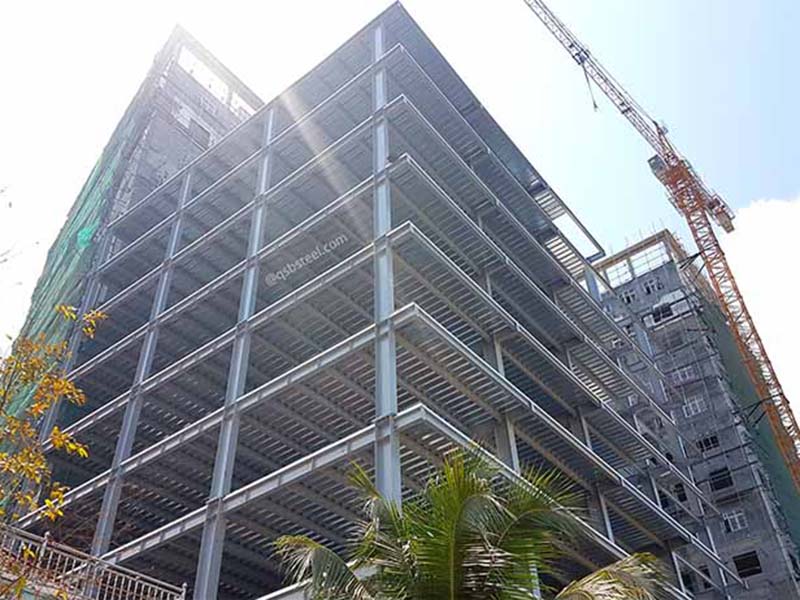
2.4 Strict Material Quality Control
For companies specializing in steel structure construction, every batch of steel is thoroughly inspected from the outset: origin, certifications, strength, chemical composition, and more.
Strict quality control ensures that materials entering production meet the required standards, minimizing risks and unexpected costs during installation.
3. Construction Process of High-Rise Steel Structures
3.1 Design Stage
Designing the structural steel system of a high-rise building is not merely drafting drawings—it is an in-depth analysis of wind loads, seismic loads, usage needs, architectural requirements, and more.
A well-executed structural design delivers three key benefits:
Reduced construction risks
Optimized material usage
Long-term operational safety
Design is the guiding blueprint that ensures all subsequent steps proceed smoothly.
3.2 Steel Fabrication
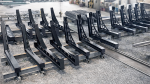
Columns, beams, braces, and other components are produced through standardized processes—from cutting and assembly to welding and surface finishing.
Businesses focus on:
High precision: minimizing installation errors
Strict quality control: from welds to coatings, ensuring components meet required standards
Progress optimization: phased fabrication supports parallel on-site erection and saves project time
In any project, up to 70% of quality depends on the fabrication stage. This is why leading contractors invest heavily in modern factories to ensure consistent output quality.
3.3 On-Site Erection
Contractors must ensure:
Proper installation procedures and logical sequencing
Well-trained personnel with safety certification
Lifting equipment that meets load requirements
Continuous alignment and error checks
Detailed documentation for progress and quality control

Conclusion
High-rise steel structures require a perfect balance of high-quality materials, optimized design, and professional construction processes. When each element is executed to standard, the building achieves long-term durability, safety, and value for investors.
📞 Hotline: (+84) 918 23 23 65
📧 Email: mkt@qsbsteel.com
🌐 Website: qsbsteel.com
Contact QSB Steel today for personalized consultation and solutions tailored to your project! 🚀
- In which types of projects is Linkway commonly used?
- Heavy Steel Components at QSB STEEL: Large-Scale Steel Fabrication Capability
- Steel Beams – Key Structural Component in Steel Buildings
- Pre-Engineered Garment Factory: An Optimal Solution for the Fashion Industry
- United Healthcare Factory (UHC)
- Applications of Pre-Engineered Buildings in Modern Industries
- Project: Welcome Gate PHU MY 03
- URC VIETNAM FACTORY PROJECT
- Standard Process of Pre-Engineered Steel Building Construction | Full Steps from A–Z
- Pre-Engineered Steel Buildings in Agriculture: A Sustainable Construction Solution for Farms and Processing Facilities
Related news:

Heavy Steel Structures: Common Applications in Modern Industrial Projects
-
What Is Steel Surface Shot Blasting? Is It Mandatory?
Essential Steel Structure Components for Industrial Buildings
Heavy Steel Components at QSB STEEL: Large-Scale Steel Fabrication Capability
ISO 45001 Occupational Health and Safety Management System in Heavy Steel Structure Construction Projects
Updated Prefabricated Steel Building Construction Price Quote 2026
-
Steel Plate Manufacturing: Common Defects and Applications

Food Processing Steel Factory Design: Ensuring Hygiene Standards and Production Efficiency