
Z Frame, I Frame, Built-Up Steel Frame: Which One Is Right for Your Steel Factory?
In industrial construction, the steel factory frame is the structural backbone of the entire project. Choosing the right type of steel frame not only determines load-bearing capacity and safety, but also directly affects construction cost, project schedule, and future expansion potential.
Today, the three most common frame types used in steel industrial buildings are Z frames, I frames, and built-up steel frames. Each has distinct technical characteristics and is suitable for different scales and functions. An improper choice can lead to overdesign, material waste, or limitations when upgrading or expanding later.
This article provides an in-depth technical analysis and comparison to help you select the most suitable steel factory frame for your project.
1. The Role of Steel Factory Frames in Industrial Buildings
A steel factory frame is the primary structural system that bears all loads of the building, including:
Self-weight of the steel structure
Roof, wall cladding, and MEP systems
Wind and seismic loads
Operational loads from machinery, equipment, and overhead cranes


A properly designed steel factory frame will:
Ensure long-term structural safety
Minimize unnecessary steel tonnage
Reduce foundation and substructure costs
Facilitate future expansion or additional floors
Conversely, poor frame selection or incorrect design can significantly increase total investment costs without corresponding performance benefits.
2. Z Frame – A Secondary Structure That Plays a Critical Role
Technical Characteristics
Z frames are typically used as roof purlins and wall girts in a steel factory frame system. Z-shaped sections are cold-formed steel members with light weight and thin thickness.
Advantages
Significantly reduces loads transferred to the main frame and foundations
Cost-effective and easy to transport and install
Simple to replace or modify when necessary


Limitations
Not suitable as a primary load-bearing structure
Limited torsional and bending resistance
Highly dependent on bracing and connection systems
When Should Z Frames Be Used?
Z frames are suitable for:
Small to medium-sized factories
Buildings without overhead cranes
Projects prioritizing low initial investment
In practice, Z frames never work independently; they are always combined with I frames or built-up frames to form a complete steel factory frame system.
3. I Frame – The Most Common and Standard Solution
Technical Characteristics
I frames (or H frames) use hot-rolled steel sections with I- or H-shaped profiles, offering stable load-bearing capacity in both vertical and horizontal directions.
Advantages
Simple structural configuration, easy to design and erect
Good load-bearing performance and overall stability
Suitable for a wide range of industrial buildings

Limitations
Limited flexibility in optimizing cross-sections based on actual load demands
Steel weight increases rapidly for large spans
Risk of material overuse if conservative design is applied
Practical Applications
I frames are widely used for:
Medium-scale manufacturing factories
Warehouses and logistics centers
Industrial buildings with light to medium-duty cranes
This makes the I frame one of the most popular choices for steel factory frame systems due to its balance between cost, durability, and construction efficiency.
4. Built-Up Steel Frame – A High-Performance Solution for Large Projects
Technical Characteristics
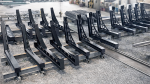
Built-up steel frames are fabricated by welding steel plates (webs and flanges) into custom-designed sections tailored to specific load requirements.
Key Advantages
Highly optimized cross-sections based on actual structural loads
Reduced steel tonnage compared to standard rolled sections
Ideal for large spans and heavy loads

Limitations
Higher fabrication cost
Requires qualified fabrication plants and strict quality control
Demands careful inspection of welding and dimensional accuracy
When Should Built-Up Frames Be Used?
Built-up steel frames are ideal for:
Large-scale industrial factories
Buildings with heavy-duty overhead cranes
Projects requiring future expansion or additional floors
From a long-term perspective, built-up frames help optimize total lifecycle costs, especially for large industrial investments.
5. In-Depth Comparison of Steel Factory Frame Types
| Criteria | Z Frame | I Frame | Built-Up Frame |
|---|---|---|---|
| Structural role | Secondary | Primary | Primary |
| Load capacity | Low | Medium–High | Very High |
| Material optimization | Low | Medium | Very High |
| Suitable span | Small | Medium | Large |
| Crane compatibility | No | Yes (light–medium) | Yes (heavy) |
| Long-term cost efficiency | Low | Medium | High |
6. Choosing the Right Steel Factory Frame from an Investment Perspective
To select the appropriate steel factory frame, investors should consider:
Is the building used for manufacturing or storage?
Will overhead cranes be installed? What is the crane capacity?
What is the current scale and future expansion plan?
Is the investment focused on short-term cost savings or long-term efficiency?
Recommended solutions:
Small factories with limited budgets: I frame + Z frame
Standard industrial factories: I frame
Large factories with heavy cranes: Built-up steel frame
Conclusion
There is no one-size-fits-all solution when it comes to steel factory frames. The optimal choice depends on structural requirements, functional use, and long-term investment strategy.
Selecting the right frame system from the beginning ensures safety, reduces unnecessary costs, shortens construction time, and provides a solid foundation for sustainable business growth.
If you are seeking consultation, design support, or cost estimation for steel component fabrication and installation for your factory project, please contact us to receive the most optimal solution.
Hotline for Export Steel Structure Quotation: Click here
 Learn more: Latest Cost Estimates for Pre-Engineered Buildings

📞 Hotline: (+84) 918 23 23 65
📧 Email: mkt@qsbsteel.com
🌐 Website: https://qsbsteel.com/
👉 Contact QSB Steel today for expert consultation and the most suitable solutions for your project! 🚀
- Duc Tin Vietnam Factory
- Pre-Engineered Parking Structures – A Modern, Durable, and Space-Optimized Solution
- Phung Nguyen Garment Factory – Dong Thap
- Pre-Engineered Steel Buildings in Agriculture: A Sustainable Construction Solution for Farms and Processing Facilities
- International Standards in Steel Structures – What Should Businesses Pay Attention to?
- Duy Tan Plastic Warehouse
- 10 outstanding projects implemented by QSB STEEL
- Common Types of Pre-Engineered Logistics Warehouses
- Natucon Singapore factory
- Typical Types of Steel Components for Expo
Related news:

Heavy Steel Structures: Common Applications in Modern Industrial Projects
-
What Is Steel Surface Shot Blasting? Is It Mandatory?
Essential Steel Structure Components for Industrial Buildings
Heavy Steel Components at QSB STEEL: Large-Scale Steel Fabrication Capability
ISO 45001 Occupational Health and Safety Management System in Heavy Steel Structure Construction Projects
Updated Prefabricated Steel Building Construction Price Quote 2026
-
Steel Plate Manufacturing: Common Defects and Applications

Food Processing Steel Factory Design: Ensuring Hygiene Standards and Production Efficiency