
Common types of steel connections in steel structures used in industrial buildings
In industrial factory design, steel connections in steel structures are essential elements that link structural components such as columns, beams, rafters, and bracing systems into a unified and stable structural system. Choosing the right type of connection not only ensures load-bearing capacity but also significantly affects durability and construction efficiency.
This article will help you understand the most common types of steel connections in steel structures used in factory buildings and how to apply them effectively in practice.
1. The Role of Steel Connections in Steel Structures
In the design and construction of industrial buildings, steel connections play a critical role. These connections act as joints between structural members such as columns, beams, rafters, purlins, and bracing systems, forming a complete structural framework that ensures strength and stability.
A properly designed system of steel connections in steel structures helps to:
Distribute loads evenly among structural members
Ensure structural stability and safety
Increase the load-bearing capacity of the steel frame
Enable fast and accurate erection on site
Facilitate maintenance and replacement when needed
On the other hand, poorly designed or improperly installed connections may lead to structural deformation, reduced load capacity, or even safety risks during operation.
Therefore, understanding different types of steel connections in steel structures is essential for both engineers and investors.
2. Common Types of Steel Connections in Steel Structures
In industrial construction, steel connections in steel structures are generally classified into three main types: bolted connections, welded connections, and plate connections.
2.1 Bolted Connections
Bolted connections are among the most widely used steel connections in modern factory projects.
Technical Characteristics
Bolted connections use high-strength bolts to connect steel components through connection plates or gusset plates. These connections are commonly applied in:
Column-to-rafter connections
Beam-to-column connections
Bracing connections
Purlin-to-frame connections
Advantages
Fast installation and easy on-site assembly
Can be disassembled for repair or expansion
Easy quality control
Suitable for pre-engineered steel buildings


Limitations
Requires precise bolt hole fabrication
Improper tightening may reduce load capacity
Thanks to their flexibility and reliability, bolted connections are considered a standard solution in many industrial projects.
2.2 Welded Connections
Welded connections are a type of steel connections in steel structures formed by melting and fusing metal at the joint between structural members.
Technical Characteristics
Welding is typically performed in fabrication workshops before components are transported to the construction site. Common welding methods include:
Manual arc welding
Automatic welding
Semi-automatic welding
Advantages
Creates strong and continuous joints
No need for drilling holes like bolted connections
Enhances load-bearing capacity
Provides better aesthetics

Limitations
Difficult to control quality if performed on-site
Highly dependent on worker skill
Not easy to dismantle when structural changes are required
Welded connections are often used in fabricating built-up steel members such as beams and columns.
2.3 Plate (Gusset) Connections
Plate connections are a type of steel connections in steel structures that use intermediate steel plates (gusset plates) to connect structural members.
Technical Characteristics
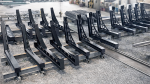
Gusset plates are fabricated according to design specifications and connected to structural members using bolts or welding.
They are commonly used in:
Column-to-foundation connections
Rafter-to-column connections
Roof and column bracing systems
Advantages
Increases stiffness and stability at connection points
Distributes forces more evenly
Allows easier adjustment during installation


Limitations
Increases steel weight if not optimized
Requires precise fabrication
In large industrial projects, plate connections are often combined with high-strength bolts to ensure durability and load capacity.
3. Classification of Steel Connections by Structural Behavior
In addition to connection methods, steel connections can also be classified based on their load-bearing behavior:
Pinned Connections
Pinned connections allow rotational movement between members while still transferring shear and axial forces. These are commonly used in simple steel frame systems.
Rigid Connections
Rigid connections can transfer shear forces, axial forces, and bending moments. They are typically used in structures requiring high stability or large spans.
Selecting the appropriate type of steel connections in steel structures directly affects the overall strength and durability of the building.
4. Key Considerations in Designing Steel Connections
To ensure performance and safety, designing steel connections in steel structures requires careful attention to the following factors:
Accurate calculation of loads transmitted through connections
Proper selection of bolts or welding methods
Compliance with structural steel design standards
Strict quality control during fabrication and erection
Ensuring accessibility for inspection and maintenance
Conclusion
It is clear that steel connections in steel structures are a key factor determining the stability and durability of industrial buildings. Common connection types such as bolted, welded, and plate connections each have their own characteristics and applications.
Choosing the right type of connection, combined with accurate design and proper construction, will ensure high safety, cost optimization, and long-term performance.
In modern industrial projects, steel connections in steel structures continue to evolve to meet increasing demands for higher loads, faster construction schedules, and future expandability.
Hotline for Export Steel Structure Quotation: Click here
 Learn more: Latest Cost Estimates for Pre-Engineered Buildings

📞 Hotline: (+84) 918 23 23 65
📧 Email: mkt@qsbsteel.com
🌐 Website: https://qsbsteel.com/
👉 Contact QSB Steel today for expert consultation and the most suitable solutions for your project! 🚀
- Common types of steel connections in steel structures used in industrial buildings
- Steel Structures: 5 Common Mistakes in Fabrication to Avoid
- Steel Structure Factory Expansion Solutions Using Pre-Engineered Steel
- Sabeco Saigon beer warehouse
- Public Steel Buildings- A Flexible, Sustainable, and Cost-Effective Construction Trend
- Vinamilk fresh milk collection station project
- Summary of typical projects implemented by QSB STEEL in 2019
- QSB Steel has conducted a trial installation for an export project at the factory.
- What Is Factory Span? Interesting Facts About Span in Construction
- PRE-ENGINEERED MODULAR STEEL BUILDINGS: THE OPTIMAL SOLUTION FOR MODERN BUSINESSES
Related news:

Heavy Steel Structures: Common Applications in Modern Industrial Projects
-
What Is Steel Surface Shot Blasting? Is It Mandatory?
Essential Steel Structure Components for Industrial Buildings
Heavy Steel Components at QSB STEEL: Large-Scale Steel Fabrication Capability
ISO 45001 Occupational Health and Safety Management System in Heavy Steel Structure Construction Projects
Updated Prefabricated Steel Building Construction Price Quote 2026
-
Steel Plate Manufacturing: Common Defects and Applications

Food Processing Steel Factory Design: Ensuring Hygiene Standards and Production Efficiency